Temple Grandin Goes to Hollywood

November 9, 2009 · Leave a Comment

Claire DanesAsperger’s Syndrome, a disorder in the autism spectrum first identified in 1944 by an Austrian pediatrician, Hans Asperger, has become a popular dramatic plot device in television shows such as House, Bones, Law & Order and Degrassi: The Next Generation. It defined the fascinating profile of the literary protagonists in Mark Haddon’s 2003 award-winning novel, The Curious Incident of the Dog in the Night-time, and in Stieg Larsson’s 2008 posthumous work, The Girl with the Dragon Tattoo.

Now Claire Danes is pegged to play the role of Temple Grandin, in an HBO movie to be released in 2010.

Some people might think if I could snap my fingers I’d choose to be ‘normal. But, I wouldn’t want to give up my ability to see in beautiful, precise pictures.
~~ Temple Grandin

Grandin overcame the limitations imposed by the disorder to become a top scientist in the field of humane livestock handling.

High school was especially harsh for Grandin, who was called “tape recorder” by other kids because she repeated things over and over, and she was hypersensitive to many forms of sensory stimulation. She eventually graduated with degrees from several universities, going on to write influential essays on animal welfare and designing humane slaughterhouses. She appears regularly on the news talk show circuit and was the subject of a BBC documentary, The Woman Who Thinks Like a Cow, and Errol Morris’ First Person: Stairway to Heaven.

In part, the fascination with Asperger’s is due to the growing social acceptance of neuro-diversity – a buzzword that aims to promote an awareness that not all brains are similarly wired. Many of the books about the disorder have been written since the 1990s, and along with that interest has come a revisionist diagnosis of many creative and scientific geniuses.

The ascendancy of Asperger’s as a popular fictional device or “It Disability,” as some have called it, is partly due to the fact that patients often present as “normal,” except for their social awkwardness and obsessive interests.

Hollywood likes to portray them as tragically misunderstood and endearingly eccentric.

“Any kind of awareness in the mainstream culture is good, I suppose. But it’s a double-edged sword. You have to ensure that it doesn’t negate the severity of the problem,” says Margot Nelles, founder of the Aspergers Society of Ontario.

Aspergers: Separating Reality from Hollywood.

What’s your AQ: Geeks and Aspergers.

→ Leave a CommentCategories: books · entertainment · film · media · psychology
Tagged: , , , ,

Exotic Fights

November 9, 2009 · Leave a Comment

Exotic Fights
About three weeks ago, the Toronto office of the World Society for the Protection of Animals (WSPA) launched an education campaign to raise awareness of the cruelty to animals inherent in blood sports such as bullfighting, bear baiting and cockfighting. One of their eye-popping print ads showed up today in Metro news, the favourite free paper of transit riders.

The smart campaign materials are designed to mimic the old-style circus event posters. At first glance these posters and advertisements seemingly publicize bullfighting, bear baiting and cockfighting events; however on closer inspection they contain clever messaging that indicates these activities are cruel and barbaric.

Created largely pro-bono by award-winning Toronto advertising agency TBWA, the campaign is designed to pique the interest of those individuals who might be attracted to attend these kinds of events with an aim to show them what truthfully happens at these events – hundreds of thousands of animals suffer unnecessarily and die solely for human entertainment.

Exotic Fights dot com.

More about the campaign.

More about the blood sports .

→ Leave a CommentCategories: Animals · culture · education · graphic design · media · sports
Tagged: , , , , , ,

There’s a Dog in my Church

October 24, 2009 · Leave a Comment

Christ Church Beaurepaire

Montreal is one step closer to being North America’s Paris: it’s gaining on the City of Lights — a famously pooch-friendly place — by offering a monthly communion church service for dogs.

Paws and Pray was recently inaugurated at Christ Church Beaurepaire, an Anglican church in Beaconsfield on Montreal’s west island, to coincide with the feast day of St. Francis of Assisi, the patron saint of animals. The communion service features bread and wine, as well as doggie treats and bowls of water for the four-legged parishioners.

The church’s minister, Michael Johnson, said he has always enjoyed doing a pet blessing once a year.

Johanne Tassé, president of Companion Animal Adoption Centres of Quebec, who suggested the idea to Johnson, said she believes the idea can have a profound impact.

“Animals deserve our care and respect,” said Tassé. “If we can bring dogs to church, how can we turn around and abuse them?”

She believes that the “deplorable” state of animal welfare in Quebec requires people take a closer look at how animals impact our lives.

“There are search-and-rescue dogs, search-and-recovery dogs, dogs to help the disabled, dogs that go into hospitals,” said Tassé. “Dogs help us so much and we need to recognize them as being part of our lives.”

She believes that by welcoming dogs into a house of worship, people will be less likely to neglect their dogs and the service can help effect a change of attitude.

“We’ve lost a little bit of our humanity,” said Tassé. “The time is right to elevate (animals’) significance in our lives.”

Full story at The Province and The Chronicle Herald.

Le French Connection/Highway of Hope.

CAACQ

→ Leave a CommentCategories: Animals · culture · religion · spirituality
Tagged: , , , , ,

Voyage to the Spirit Mountains

October 24, 2009 · 1 Comment

Author and musician, Paul Quarrington, diagnosed with stage four lung cancer, eloquently describes his plans to live each day as though it is his last, connecting with singing and the Canadian landscape.

Torngat Mountains

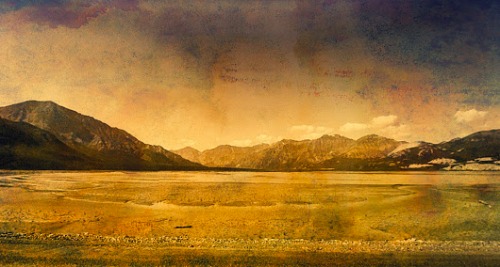
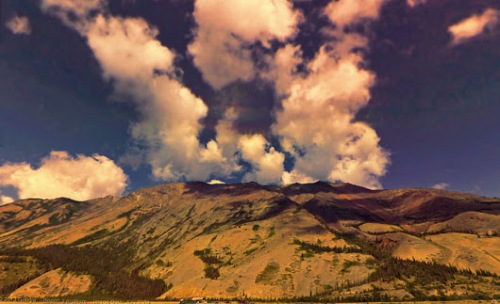
“As we journeyed through the Torngat Mountains, I finally realized what this trip was all about, for me. First of all, let me get a little scientific on you. The Torngats-comprised of Precambrian gneisses-are amongst the oldest mountains in the world, almost four billions years old. They rise out of the water with enchanted austerity. Sitting well above the tree line, the Torngats are stark naked and make no apology about it. Torngat is an Inuktitut word meaning Place of Spirits, and it very clearly is. The mountaintops are usually shrouded in cloud, and it’s easy enough to imagine the Spirits assembling there, going through the itinerary for another year.  In short, the Torngat Mountains took what little breath I have away from me. The thought occurred that I was on another planet, and that’s when I realized, no, I’m on this planet, I’m just none too clear on what it actually looks like. I realized that what I wanted to do was spend a little time getting to know the third stone from the sun; it has been my home for 56 years, but I have spent much of it confined in the settlements. I wanted to explore and examine, I wanted to interact-yes, in the broadest, most spiritual sense.

So there, basically, you have the two main components of my plan for (what remains of) my future: singing and (spiritual) mountain climbing. For example, I think I’ll go fishing this week, getting to know Mother Ship Earth a bit better. I think I’ll go stand in a river just a few degrees above freezing and toss a yarn-fly into the current, over and over again, in the hopes of convincing some chromium-silver steelhead that the thing is edible. Or, I may simply go walkabout, kicking stones and major rock formations. I will build inuksuit (did you know that was the plural? I learned a lot on my voyages…) and I will try to build them across as much of the landscape as I can. In the meantime, I will be singing, all manner of songs. I will sing in Porkbelly Futures, I will sing with fiddlers and button accordionists, I will sing in Gospel choirs and Glee Clubs.

Torngat Mountains

Inuit mythology tells of the Torngait, the spirits that a Shaman or spiritual leader looks to for wisdom and power. Torngat comes from this Inuit name and the legends which hold that in this region the spirit world overlaps our own. White people have called this area the Ghost Coast and have commented how the sounds of the winds whistling through the rugged mountains bring forth the feeling that one is in another realm. If the earth is home to ancient spirits they would seek out this land where the rocks are among the oldest on the planet and the landforms hold an otherworldly appearance. Perhaps this truly is a place of spirits.

The Torngat Mountains National Park Reserve is the new name for this ancient place. It is the northern portion of the Inuit homeland of Nunatsiavut, located in northern Labrador. (Nunatsiavut means “Our beautiful land” in Inuktitut, the language of the Inuit.) The park reserve encompasses roughly 10,000 km2 and extends from the deep waters of Saglek Fjord in the south, to the very northern tip of Labrador; and from the boundary with Quebec in the west, to the waters of the Labrador Sea in the east.

The human history of the park is rich and ancient. Within the park there are hundreds of archaeological sites including tent rings, stone caribou fences, caches, and ancient graves, all of which tell the story of the peoples and cultures, particularly the Inuit, who have made this special landscape their home.

Ramah Chert

South of Nachvak Fjord is Ramah Bay, home to a unique translucent stone called Ramah chert. This mineral holds an edge that is sharper than surgical steel. It was so prized by the ancient peoples of Labrador that prior to contact with the Europeans, some used this mineral almost exclusively in their arrows and blades.

Paul Quarrington: Each Day Like It’s My Last at National Post.

More at Wanderbird Expedition Cruises.

Ramah Chert.

For Sydney, and for Linda Gordon who loves the landscape.

→ 1 CommentCategories: archaeology · books · culture · environment · history · music · nature · psychology · religion · spirituality
Tagged: , , ,

Baxter the World’s Best Therapy Dog

October 22, 2009 · Leave a Comment

Baxter

Baxter, the world’s best, most devoted, and oldest working therapy dog, 19 years and 6 months, eased peacefully from his life on Friday afternoon, October 16th. His angel wings were well deserved.

You’re in the arms of an angel. May you find some comfort there.

Baxter, a chow mix rescued at the age of two, began volunteering seven years ago at San Diego Hospice. In a place created for making goodbyes gentler, Baxter comforted everyone who crossed his path. He licked tears from grieving faces, gave hugs to those at a loss for words, and warmed the hearts and souls of those who were making their transition. He would take his body and curl himself next to a patient for hours, making this intense eye contact that penetrated the human spirit in everyone, proving his undeniable loyalty, love, and sensitivity. Everyone loved Baxter!

Baxter has his own blog, Facebook page and book, Moments With Baxter.

In the last few years the arthritic Baxter needed to be pushed into the hospital rooms on a little wagon and gently placed into the arms of the dying. It was his vulnerability in his old age that helped him bond even more to the patients he helped let go of life. Watch this beautiful tribute to this amazing dog.

→ Leave a CommentCategories: Animals · books · psychology · spirituality
Tagged: , ,

Raven Steals the Sun

October 15, 2009 · 1 Comment

Raven Steals The SunThis is an ancient story told on the Queen Charlotte Islands about how Raven helped to bring the Sun, Moon, Stars, Fresh Water and Fire to the world.

Long ago, near the beginning of the world, Gray Eagle was the
guardian of the Sun, Moon and Stars, of fresh water, and of fire.
Gray Eagle hated people so much that he kept these things hidden.
People lived in darkness, without fire and without fresh water.

Gray Eagle had a beautiful daughter, and Raven fell in love with her.
In the beginning, Raven was a snow-white bird, and as a such, he
pleased Gray Eagle’s daughter. She invited him to her father’s
longhouse.

When Raven saw the Sun, Moon and stars, and fresh water hanging on the sides of Eagle’s lodge, he knew what he should do. He watched for his chance to seize them when no one was looking. He stole all of them, and a brand of fire also, and flew out of the longhouse through the smoke hole. As soon as Raven got outside he hung the Sun up in the sky. It made so much light that he was able to fly far out to an island in the middle of the ocean. When the Sun set, he fastened the Moon up in the sky and hung the stars around in different places. By this new light he kept on flying, carrying with him the fresh water and the brand of fire he had stolen.

He flew back over the land. When he had reached the right place, he
dropped all the water he had stolen. It fell to the ground and there
became the source of all the fresh-water streams and lakes in the
world. Then Raven flew on, holding the brand of fire in his bill. The
smoke from the fire blew back over his white feathers and made them
black. When his bill began to burn, he had to drop the firebrand. It
struck rocks and hid itself within them. That is why, if you strike
two stones together, sparks of fire will drop out.

Raven’s feathers never became white again after they were blackened
by the smoke from the firebrand. That is why Raven is now a black bird.

Ravens symbolize many things in different cultures. Native American tradition honors the raven as a symbol of courage and of magical guidance. The Arab culture calls the raven Abu Zajir which means “Father of Omens.” They are seen as oracular birds, used in divination. They are seen as symbols of death, life, the sun, magic, shapeshifting, and tricksters.

Legend from Ella E. Clark: Indian Legends of the Pacific Northwest, University
of California Press, 1953.

Image:  Raven Stealing Sun, by Ken Mowatt.

Andrew Thornton, jewellery artist, discusses inspiration at Flight of the Raven King. The necklace shown is The Raven Queen.

Raven Queen

Raven Frees the Moon, an argillite pendant by Haida artist P.J. Ellis, from Spirits of the West Coast dot com, soon to be part of a Canuck version of The Raven Queen

Raven Frees the Moon

→ 1 CommentCategories: Animals · art · culture · design · graphic design · jewellery · spirituality
Tagged: , , , , , , , ,

Goodbye Phoenix

October 6, 2009 · Leave a Comment

PhoenixMany of us have been following the story of Phoenix, the abandoned and neglected chow chow that was rescued by Durham Humane Society. We’d hoped for his recovery and then, when his incurable cancer was discovered, we hoped that he would enjoy time with his new adoptive family. We hoped he would have more time than he did.

Phoenix went peacefully to the Rainbow Bridge last Friday, surrounded by the people who loved him most. In the two days prior he had stopped wanting to eat, spent most of his time sleeping and showed little interest in the things that had been giving him joy.

His foster parents Tracy and Mike, Debby Houghton the investigator on his case and Ruby Richards, the shelter manager were all with him at the end giving him hugs and kisses.

Fred, at One Bark at a Time, was able to find the right words to express how we felt about Phoenix and about all animals whose humans have broken a sacred trust.

→ Leave a CommentCategories: Animals
Tagged: , ,

Hachiko Meets Richard Gere

October 3, 2009 · Leave a Comment

Earlier we recounted the tale of Hachiko, the Japanese akita, revered for his fierce loyalty to his master, Professor Ueno. A Japanese Greyfriars Bobby… The children’s book, written by Lesléa Newman and illustrated by Machiyo Kodaira, won the ASPCA Children’s Book Honor in 2004.

A joyously tearful 1987 Japanese movie, Hachiko Monogatari, followed. Hachiko’s legend featured in David Wroblewski’s , first book, The Sawtelle Dogs.

HachikoNow, Hachiko: A Dog’s Tale, is being released in American theatres on December 18, 2009. It stars Richard Gere as the professor, Forest as Hachiko, and a couple of shiba inu puppies as the young Hachiko. It is set in Bristol, Rhode Island, and everyone speaks American.

According to one of the movie’s producers: “Something about this dog’s simple act of unwavering loyalty, of waiting, is so profoundly moving…People seem to identify with Hachiko. He symbolizes so many different things to different people. Hachiko represents innocence, fear, hope, joy, loss and loneliness.”

In May 1994, Japan’s Culture Broadcasting Network played a recording of Hachiko barking which had been made from a broken record repaired with laser surgery. Millions of people tuned in to listen to Hachiko barking, 59 years after his death. Each April, tens of thousands visit the dog’s statue at the Shibuya train station, during a festival in which food offerings are left at the base of the dog’s statue, in hopes that his loyal spirit will visit all humans.

Go see the movie, and take lots of Kleenex. But please don’t hit the pet shop after and buy an akita or shiba inu. As Harry Haller noted, these steppenwolves are magic theatre and not for everyone…

For more on the akita and its recovery from near-extinction during World War II, read The Man Who Saved Akitas.

Image: Hachiko, stuffed, at the National Museum of Nature and Science, Tokyo.

→ Leave a CommentCategories: Animals · culture · film · history · literature · media

Nelvana of the Northern Lights

September 20, 2009 · 1 Comment

NelvanaNelvana, aka secret agent Alana North, is the daughter of a mortal woman and Koliak the Mighty, King of the Northern Lights. Koliak’s marriage to Nelvana’s mother so angered the gods that his spirit was transformed into the Northern Lights.

Nelvana is able to fly and she can travel at the speed of light on a giant ray of the Aurora Borealis. She can also call upon other powers of the Northern Lights, including Koliak’s powerful ray, which can melt metal and disrupt radio communications. As well, she can make herself invisible.

Nelvana is called upon to assist the Inuit. She discovers that the “evil white ones”, led by Commander Toroff, are destroying fish and other food stocks with time bombs. Koliak assists Nelvana and transforms the Northern Lights into a gigantic magnet which draws the bombs skyward, where they explode harmlessly. Toroff then attacks Nelvana with killer boats armed with Thormite Rays, all the while surveying the battle from his Devil Ship by means of his aeroscope.

Meanwhile, Nelvana discovers that enemy warplanes are amassing for an invasion of the North. The invasion is thwarted by Koliak’s ray, which disrupts communications and leads to the defeat of the enemy force by the Royal Canadian Air Force. As a result, Nelvana’s existence becomes known to southern Canadians and to Hitler, who is so frustrated by “Dis Arctic girl” that he dispatches two agents to the Arctic to foil Nelvana.

The rest of the story is at Guardians of the North, Library and Archives Canada.

Labradorite

Labradorite, also known as the Shaman’s Stone, or the dark side of the moon, is believed to reveal that which is present but which can not be seen by the light of the conscious mind without reflection.

Labradorite is a crystallized stone belonging to the family of Feldspar. The color is mainly blue, green or gold, but it can also be purple, pink or show interplay of the whole rainbow. The color is due to the presence of microscopic plates of different metals such as iron, copper and nickel and their disposition is strict parallel lines. A piece may look like an ordinary stone until you turn it to catch the light and reveal its many colors.

An Inuit legend recalls a time when the Northern Lights became imprisoned in the rocks of Labrador. An Inuit Shaman saw the lights and struck the earth with his spear and freed them. However some of the lights hid in it’s rocks, but they were discovered by the sun and water, hence we have Labradorite.

Image:  Adapted from Bill Wise, 2006

Inspiration:  The extraordinary gemstones of Bead It, Montreal, Quebec

Budget-savvy fashionistas string their own bling

→ 1 CommentCategories: art · books · design · environment · graphic design · illustration · nature · psychology · religion · science · spirituality

Early Morning Rain: Gordon Lightfoot

September 17, 2009 · Leave a Comment

Just had to post this.  Gordon attributes his success to Peter, Paul and Mary’s cover of Early Morning Rain.

Priceless.

→ Leave a CommentCategories: entertainment · music
Tagged: , ,